Gift Wrap Handbag Template: A Designer's Review
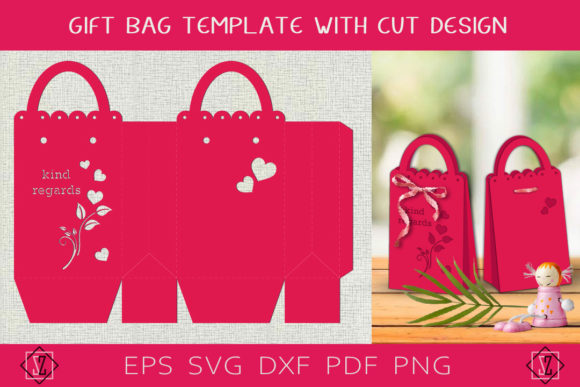
As someone who spends most of their day digitizing files and reviewing machine embroidery design assets for a living, I approach every new download with a critical eye. It is not enough for a file to look pretty on a screen; it must translate flawlessly onto fabric, withstand the tension of the hoop, and ultimately delight the end customer. Recently, I took a close look at the Gift Wrap. Handbag Template. Cutting Fil. While this product is categorized under Gift Boxes and described as a 3D SVG, my interest lies in how this template functions as a foundational element for tangible, stitched goods. This is not just a digital cutout; it is a potential cornerstone for a small shop product line.
First Impressions and Visual Personality
Upon opening the file, the first thing that strikes me is the versatility inherent in the layout. The design carries a mood of celebration and thoughtful presentation. It feels less like a generic clipart image and more like a structured handmade product waiting to happen. The lines are clean, suggesting that if this were adapted into an applique design or used as a guide for placement, it would offer excellent clarity. For embroidery designers, the visual personality here is key: it screams "boutique." It avoids the cluttered, overly dense look that often plagues free downloads, offering instead a refined aesthetic suitable for wedding souvenirs, birthday gifts, or Valentine's Day specials.
The term "cutting file" in the title suggests this is primarily intended for vinyl cutters or laser machines to create physical boxes or bags. However, as an embroidery professional, I immediately see its potential as a placement guide or a stencil for complex embroidery project setups. Imagine using this template to cut a precise window in a heavy cardstock backing, allowing you to embroider directly onto a textured fabric that will later be assembled into a luxury gift box lining. That is the kind of forward-thinking application that separates hobbyists from serious craft business owners.
Real-World Application: The Boutique Gift Bag Scenario
Let's walk through a realistic scenario where this asset shines. Picture a client who runs a high-end candle shop. They need packaging that reflects the artisanal quality of their wax blends but also serves as a keepsake. They come to you for a custom solution. You pull up the Gift Wrap. Handbag Template. Cutting Fil. Instead of just cutting it out of paper, you use the vector paths to create a die-line for a sturdy cotton canvas tote or a structured gift bag.
In this context, the template becomes the skeleton of your finished product. You could embroider a monogram or a floral motif using a satin stitch right in the center panel defined by the template. Because the template provides clear boundaries, you know exactly where your hoop size needs to sit to ensure the design doesn't get lost in the folds of the final assembly. For an Etsy seller, this adds immense value. You aren't just selling a candle; you are selling a branded experience. The customer receives their item in a bag that was clearly designed with care, featuring crisp embroidery that aligns perfectly with the bag's structure.
This approach works equally well for custom apparel or sweatshirt embroidery where the "gift" aspect is thematic. If you are creating a holiday gift set, using this template to design a matching embroidered patch that gets sewn onto a cozy blanket or pillow cover can tie the whole collection together. The clean lines of the template ensure that even intricate fill stitch areas have enough room to breathe, preventing the dreaded puckering that ruins otherwise good work.
Technical Considerations for Stitching Success
While the potential is high, we must discuss the technical realities. Since this is fundamentally a 3D SVG intended for construction, applying it to embroidery requires some adaptation. If you plan to embroider directly onto the material that will be folded into the box or bag shape, you must be mindful of fabric texture and thickness. Thick cardstock or heavy interfacing, often used with these templates, can be tricky to hoop.
You need to consider stitch density carefully. If you are filling large areas defined by the template, a standard dense fill might make the fabric too stiff to fold cleanly along the score lines. In such cases, switching to a lighter running stitch pattern or reducing the density of your embroidery file is crucial. Always test the design on scrap fabric first. Check how the fabric behaves after stitching and folding. Does the thread break at the corners? Does the stabilizer add too much bulk?
Furthermore, pay attention to small details. If the template includes tiny text elements or delicate corners, these are high-risk areas for machine embroidery. On dark fabrics, ensure your thread colors provide enough contrast so the design pops. On stretchy fabrics, like those used for tote bag design variations, a robust stabilizer is non-negotiable to prevent distortion. Curved surfaces, such as if you were adapting this for a cap or a rounded box lid, require extra vigilance regarding pull compensation.
Enhancing Brand Value and Customer Trust
Ultimately, the choice of design assets like Gift Wrap. Handbag Template. Cutting Fil comes down to brand perception. When a customer unboxes a personalized gift, the quality of the presentation speaks volumes about the maker. A sloppy, misaligned embroidery job on a poorly constructed bag undermines trust. Conversely, a precise, well-executed design elevates the perceived value of the item inside.
For commercial embroidery professionals, consistency is king. Using a reliable template ensures that every unit you produce looks identical, fostering brand recognition. Whether you are making baby embroidery items for a nursery boutique or holiday embroidery gifts for a corporate client, the structural integrity provided by a good template allows your stitching to be the star. It creates a cohesive look that customers remember and return for.
Final Verdict and Practical Notes
The Gift Wrap. Handbag Template. Cutting Fil is a robust tool for the creative entrepreneur who thinks beyond the needle. It bridges the gap between digital design assets and physical merchandise. However, before integrating it into your workflow, there are a few housekeeping items to address. Since specific technical details like exact stitch counts or machine compatibility are not inherent to an SVG template, you must verify these aspects based on your own digitizing capabilities or intended use.
- Check Licensing: Before selling finished items or digital products derived from this file, confirm the licensing terms. Some creators allow commercial use of physical goods but restrict the resale of the digital file itself.
- Mockup Testing: Test the design in black and white mockups to ensure the shapes hold up without relying on color. This helps identify weak points in the layout.
- Fabric Compatibility: Compare how the design looks on light versus dark fabric backgrounds. Some details may vanish on certain textures.
- Stabilizer Selection: Match your stabilizer to the weight of the material you are constructing. A heavy gift box might need a tear-away, while a soft bag needs a cut-away.
In conclusion, this template offers a solid foundation for creating unique, high-value items. It invites you to think creatively about how embroidery interacts with structure. Whether you are an experienced decorator or a maker just starting your journey, treating this file as a partner in your design process rather than just a download can lead to stunning results. With careful planning and a keen eye for detail, the Gift Wrap. Handbag Template. Cutting Fil can help you craft products that truly stand out in a crowded marketplace.